

How to Choose the Best Burr Coffee Grinder
A grinder is one of the most essential tools in a coffee maker's arsenal. What kind of grinder should you get?
Burr grinders crush beans between two revolving serrated surfaces instead of cutting them using blades. They're generally thought to be superior to blade grinders. But what features should you be looking for in a burr grinder?
1. Conical Burrs
A conical-shaped burr mill has sharp teeth that are angled and a circular burr ring inserted within the other. This shape allows it to grind more efficiently, since the burrs rotate around a central point. The conical teeth are more efficient in cutting beans evenly and produce less heat. This is beneficial since excessive heat can create bitter taste in your coffee. Conical burrs last longer than flat burrs. Flat burrs are more prone to warping and dull quickly, which results in unevenly ground espresso. They also tend to be more brittle, meaning that small stones or other debris can damage the burrs over time. Additionally flat burrs produce more noise and require more frequent cleaning and maintenance.
A number of burr grinders offered for sale call themselves "burr grinders," yet they have flat or no burrs. These "false burr grinders" come with large flat teeth and are often coupled with motors that are weak and produce uneven ground. They aren't true burr grinders and, contrary to what some people believe they don't have the same quality of grind as real burr grinders.
Although some experts do not agree, others claim that the type of burrs in the grinder can have an impact on the finished taste of the coffee. These theories are largely based on anecdotes however they hold an unshakeable hold on the minds of coffee enthusiasts. Some believe that conical burrs can bring out the unique flavors of exotic beans while flat burrs enhance dark roasts.
This may or not be the case. However, it's something you should think about in the event that your grinder has an impact on the quality of your espresso. The only way to be sure for certain is to try a grinder out with the beans you plan on using it with. The overall design of the grinder and its features of operation will have more of an impact on the final cup than the style or burrs. It is therefore crucial to take into consideration other factors when evaluating the grinder, including its reputation as well as customer reviews.
2. Convenience
The Baratza Encore burr grinder is one that many coffee lovers swear by. Several reviewers praise it as a "time-tested choice" that offers great value for money and is designed for drip, pour-over, French press, and cold brew.
According to the company, the grinder makes use of rotating metal burrs rather than blades to grind beans. This results in more uniform ground than a grinder or other burr grinders. Additionally, the burrs generate less heat while grinding, which preserves more of the bean's flavor and aroma.
Blade grinders, on the other hand, can produce excessive heat and unevenly sized grounds, which affects the taste of the final cup. Burr grinders can also be quieter than blade grinders, but this can differ based on the model and brand.
Some burr grinders employ flat burrs instead, rather than conical ones. These are two discs that have cutting edges that are facing each one. We don't recommend them for espresso because they tend to be more difficult to calibrate and are generally more expensive than a premium burr grinder with a flat-burr like the Fellow Ode Gen 2 or the Baratza Virtuoso+.
Some of the grinders that we tested let you choose the amount of time that the machine will grind, which can be useful for those who are making espresso. Some, like our top pick, the Baratza Sette 270--have an integrated smart timer that delivers precise split-second timing. This feature is not necessary for all brewing techniques and the majority of burr grinders that cost less than $200 use the most expensive version of the windup clock.
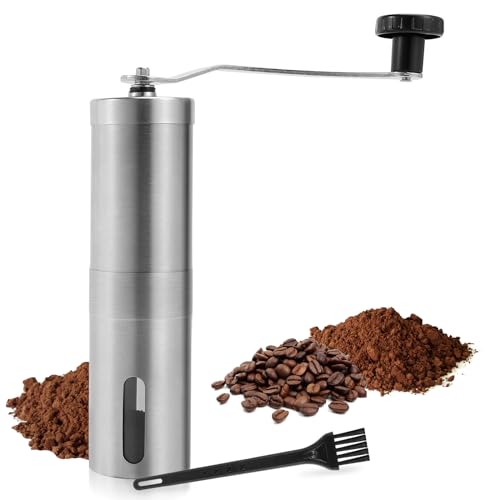
The cheapest models in our selection, like the Porlex II and the Capresso Infinity--use manual burrs. This means you'll have to crank them manually by hand to grind your coffee. This is more laborious, but is a great choice when you're seeking a simple compact and affordable option without electrical power.
The Breville Smart Grinder Pro is an alternative that is affordable and features a burr grinder. coffee machine and grinder Coffeee is louder than other models that we have examined, but it's acceptable if you're not worried about some background noise. In general, the more expensive the grinder is the quieter it's likely to be due to improved materials and sophisticated soundproofing technologies.
3. User-Friendliness
If you're just starting to discover the world of home coffee brewing, there's one tool experts agree is essential is a burr mill. These grinders create a finer, more consistent grind than a blade grinder, and will assist in creating brews that have more balance in flavor, body and acidity. They also achieve this more effectively. As you might expect, a good burr mill could cost up to $200 and can be difficult to use.
We sought advice from experts for the best electric burr grinders you can use. They recommend the OXO conical burr grinder to a lot of people, including those who don't want to spend a fortune. It comes with multiple settings to handle a variety brewing methods from pour-over, French press, to drip coffee. It also was a success during our tests.
It's also quieter than other electric grinders we've tested and doesn't generate more heat. This is crucial, since excessive heat can harm the delicate aromas of your beans.
The OXO grinder's biggest drawback is that it's designed at grinding on the coarse end of the spectrum which could be a problem with espresso. If you're brewing espresso, a more advanced burr grinder, such as the Baratza Encore might be a better choice.
Manual burr grinders that are powered by cranking, are easy to use and are great for those who consume only a cup or two of coffee per day. These grinders are perfect for those who travel, or who only require only one cup of pour-over coffee.
Bon Appetit Test Kitchen director Chris Morocco loves the Fellow Ode Gen 2 Burr Grinder, which has 41 adjustable settings that are capable of producing an excellent brew regardless of the method you prefer, with the exception of espresso (the flat burrs made of steel don't grind well enough). It's easy to use for anyone who isn't afraid of small messes and flying particles, and it's also relatively quiet.
4. Cost
A good burr mill will cost you a few hundred dollars, but it's definitely worth it. The grinding mechanism is simple enough that even a beginner can figure out how to get the most out of it, and you'll save money in the long run by ditching the pre-ground coffee and bad-for-the-environment coffee pods.
Conical burr grinders are the standard in electric home units, and they're a great choice for most people just starting out with this whole grinding-your-own-beans-at-home thing. They can produce a bit of fines (the tiny pieces of coffee ground that are smaller than the official grind size you choose), but this won't be noticeable to the majority of drinkers, and it's a small cost to pay for delicious consistently-sized coffee grounds.
Flat burrs are two discs with cutting teeth that face one another. They are not as common but are preferred by coffee geeks because they provide a more consistent size of grind, ideal for French press and espresso. They can be costly and you may need to purchase new burrs each when you change the brew type or level of roast.
The Baratza ESP has the best combination of cost and capability for a burr mill, according to our experts. It's less than $200, which is far lower than the majority of other models that lack the same level of capabilities. It comes with a 64-mm flat burr set that is ideal for any brewing method and is easy to upgrade with other sets like the ones from SSP.
The OXO is a different option that is priced reasonably with a solid performance record in our tests. Its burrs may not be as precise as those in more expensive models, but it comes with various settings that work for drip and French press and its user interface is simple. While true coffee geeks will want a more advanced model, the OXO is a great entry point for the majority of people.
For those who prefer to crank their beans manually We also tested a handful of manual burr grinders that are perfect for travel and for people who are able to make one or two cups at a time. These models use the same mechanism for grinding as electric burr grinders, but work by hand instead of motors. They are also usually quieter than electric ones.